


| Category | Spectacle Prescription |
Clear vision is important for reading, working, driving, studying, and performing everyday activities comfortably. When your vision becomes blurred or you experience difficulty focusing on objects at different distances, you may require a vision assessment and an updated spectacle prescription in Sector 2 Faridabad.
At Trinity Multispeciality Clinic, patients can discuss changes in vision, eye strain, headaches, or difficulty seeing clearly. A proper eye examination helps identify refractive errors and determine whether spectacles may be appropriate for improving visual clarity.
A spectacle prescription is a set of measurements used to determine the appropriate corrective lens power for an individual's vision. It is based on the results of an eye examination and helps correct refractive errors that affect how clearly light is focused on the retina.
A prescription may include different measurements for the right and left eyes. Depending on the individual's vision, it can include values for spherical power, cylindrical power, and axis.
The prescription required by one person may be different from another, which is why an individual vision assessment is important.
Spectacles may be recommended for several types of refractive errors, including:
Myopia, commonly called short-sightedness, can make distant objects appear blurry while nearby objects may remain clearer.
Hyperopia, or long-sightedness, can make it difficult to focus on nearby objects and may sometimes cause blurred vision at different distances.
Astigmatism occurs when the eye has an irregular curvature that can affect the way light is focused, potentially causing blurred or distorted vision.
Presbyopia is an age-related change in the eye's ability to focus on nearby objects. It commonly becomes noticeable during adulthood and may make reading or close-up work more difficult.
Your existing spectacle power may need to be reassessed if you notice:
These symptoms can have different causes, so an eye examination is useful before changing your spectacle power.
A spectacle prescription evaluation generally begins with a discussion about your visual concerns and previous spectacle use. Your vision is then assessed to determine whether there is a refractive error.
The examination may involve:
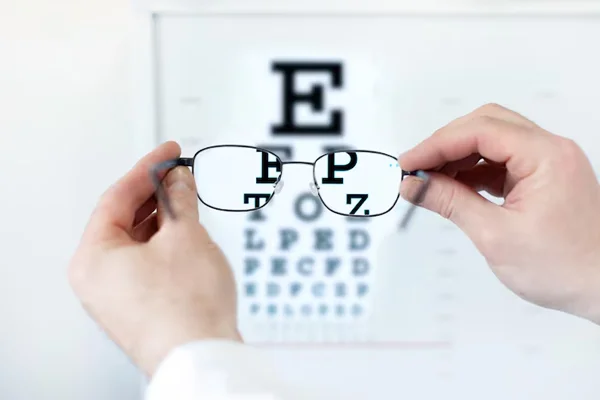
Visual Acuity Testing: This evaluates how clearly you can see at different distances.
Refraction: Different lens powers may be assessed to determine which correction provides clearer vision.
Eye Examination: Depending on your symptoms and age, the doctor may also recommend an examination of the overall health of your eyes.
If the findings suggest that your symptoms are not simply due to a refractive error, additional evaluation or specialist consultation may be recommended.
Using the appropriate lens power can help improve visual clarity and make routine activities more comfortable. An inaccurate or outdated prescription may result in continued blurred vision or visual discomfort.
It is also important not to rely on another person's spectacle prescription, as vision requirements vary between individuals and can change over time.
Children, older adults, and people experiencing frequent changes in vision may require regular assessment based on their individual needs.
Spectacle lenses can be prescribed for different visual needs. Some people may require correction primarily for distance vision, while others may need lenses for reading or close-up activities.
Some individuals may benefit from lenses designed to provide correction at multiple distances. The most suitable option depends on your vision requirements, lifestyle, age, and professional assessment.
Your eye-care provider can explain the available options after evaluating your vision.
There is no single examination schedule that applies to everyone. The appropriate frequency depends on factors such as age, existing eye conditions, family history, previous prescription changes, and symptoms.
You should consider an eye examination if you notice a significant change in vision or if your current spectacles no longer provide comfortable, clear vision.
Sudden vision loss, severe eye pain, flashes of light, or a sudden increase in floaters requires prompt medical attention rather than a routine spectacle prescription appointment.
Trinity Multispeciality Clinic offers multispeciality healthcare services in Sector 2, Faridabad. If you are searching for spectacle prescription in Sector 2 Faridabad, you can visit the clinic to discuss your vision concerns and determine whether a vision assessment is appropriate.
A proper evaluation can help identify common refractive errors and determine whether corrective spectacles or further eye assessment may be required.
Along with regular eye examinations, healthy visual habits can help reduce everyday eye strain:
A spectacle prescription specifies the lens power required to correct an individual's refractive error and improve visual clarity.
Yes. Refractive errors can change with age and other factors, so periodic vision assessments may be recommended.
Headaches can sometimes be associated with uncorrected refractive errors or visual strain, but they can have many other causes. An eye examination can help determine whether vision is contributing to the problem.
It is not recommended. Spectacle prescriptions are individual, and using an unsuitable prescription may not provide clear or comfortable vision.
Blurred vision, difficulty focusing, frequent squinting, eye strain, or discomfort while using your current spectacles may indicate that your vision should be reassessed.
Children may need periodic vision assessments because refractive errors can change as their eyes develop. The appropriate frequency depends on the child's individual needs.
For a spectacle prescription in Sector 2 Faridabad, you can consult Trinity Multispeciality Clinic for a vision assessment and appropriate eye-care guidance.